By our Asia correspondent HIDESHI TOKUCHI, President of the Research Institute for Peace and Security (RIPS), Tokyo

The Japanese have become more security-minded in recent years, witnessing the Russian invasion of Ukraine, China’s assertive behaviour at sea such as increasing pressure on Taiwan, and North Korea’s nuclear and missile ambitions. Tokyo’s approach to national security reflects the significant shift in the Japanese mindset.
New leadership in Tokyo
Japan’s new coalition government began under Prime Minister Sanae Takaichi in October 2025. In her policy speech before the National Diet, she announced she would revise the National Security Strategy in one year, earlier than the original schedule. She also announced an increase to Japan’s defence spending of up to 2% of GDP in fiscal year 2025, two years ahead of the original schedule.
Deterioration of the international order
The current National Security Strategy, established in December 2022, had stated that Japan’s security environment is as severe and complex as it has ever been since the end of the second world war. This recognition is the basis of the most recent shift in Japan’s approach to its national security, as shown in the agreement of the two ruling parties concluded at the start of the new coalition government.
So, what is the difference between today’s environment and that of 2022? Today’s world is more disorderly. The rules-based international order, which western countries including Japan worked together to maintain for a long time, is exposed to serious challenges from both outside and inside. This situation has a grave impact on east Asia.
- Friendship between dictators
First, Russia, China and North Korea are disrupting the rules-based order. They are not constrained by the rule of law. China and Russia boast their “no-limit” friendship. China supports the Russian invasion of Ukraine, and North Korea is also helping Russia. The Chinese and Russian militaries are jointly operating in the vicinity of Japan to threaten the country. The tensions in the Taiwan Strait are getting higher, and Russia and North Korea support China’s position on Taiwan.
- American unprincipled behaviour
Second, the decline of democracy in the US and the unprincipled behaviour of its current administration are also disrupting the order. US soft power is declining, which will damage its hard power and the credibility of the democratic concept of the rules-based international order.
- New ways of warfare
Meanwhile, new ways of warfare are emerging due to rapid progress of technologies and mutual dependence. Hybrid warfare is becoming more skilled, while the credibility of deterrence is eroding. The ability to defend ourselves is more important than ever.
“The ability to defend ourselves is more important than ever.”
Shaping a new strategy
While the rules-based international order is in crisis, no viable alternatives are yet to be seen. How to contribute to the international efforts to restore the rules-based order is the biggest challenge for Japan.
Strengthening its comprehensive national power is the baseline. However, no single country can ensure its national security alone in today’s connected world. It is too early to abandon the US, but diversification of partnerships is inevitable.
“No single country can ensure its national security alone in today’s connected world.”
Liberal democracies in Europe and Asia must work more closely to take care of the world until the US is back. Nobody knows when that will be, but if we become too pessimistic, it would be counterproductive.
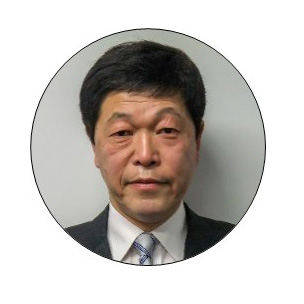 Our Asia correspondent Hideshi Tokuchi has been the President of RIPS, an independent thinktank in Tokyo, since 2021, and writes and speaks about East Asian regional security issues and Japan’s national security policy. Hideshi served as Japan’s first-ever Vice-Minister of Defence for International Affairs from 2014 to 2015.