Interview with MARIE-AGNES STRACK-ZIMMERMANN MEP, Chair of the European Parliament’s SEDE committee, Brussels/Strasbourg
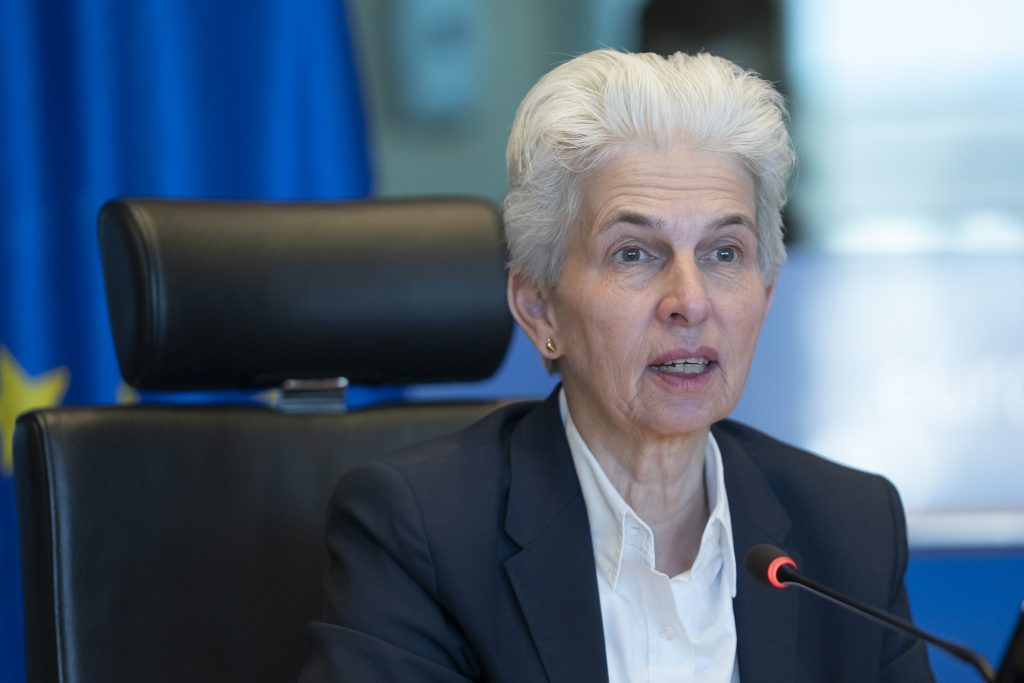
© European Union 2025 – Source : EP
(ENJ/hb,nc) The idea of a European defence union was long considered taboo, as defence, despite military alliances, was viewed as a purely national matter. However, in the fourth year of the Russian war against Ukraine, and given Trump’s disinterest in funding European security, a shift has become apparent in 2025: the Subcommittee on Security and Defence (SEDE) evolved into a fully-fledged committee of the European Parliament, then EU Commissioner for Defence and Space Kubilius presented the White Paper on Defence – Readiness 2030, and Commission President von der Leyen unveiled the ReArm Europe plan/Readiness 2030 package, along with a roadmap for transforming the European defence industry. However, is the vision of a European defence union politically realistic today?
 From the ENJ magazine, no1/Dec 2025: European new Journal asked the chair of the European Parliament’s Committee on Security and Defence (SEDE) about her vision of a credible European defence capacity and Europe’s ability to resist Russian interferences and guarantee Ukraine’s security.
Ms Strack-Zimmermann, in recent interviews you spoke forcefully about the European Union’s role in providing security guarantees for Ukraine. Do you believe Europe is capable of providing such guarantees in a credible way even without US support, should it come to that?
M-A Strack-Zimmermann: Europe must be able to defend itself and its partners independently if necessary. Of course, the transatlantic partnership remains the backbone of our collective security, but we cannot base our future on the assumption that the United States will always carry the main burden. Europe has the industrial, technological, and financial means to provide credible security guarantees for Ukraine, if it acts together and decisively. This is not a question of capability, but of political will and coordination.
Russia’s hybrid warfare against Europe, seeking to destabilise western societies through interference and widespread disinformation campaigns, is intensifying. Provoking Europe and NATO member states by flying drones and military aircraft over their territory and critical infrastructure, such as airports, and sowing chaos, is part of this tactic. How can Europe respond to this problem, politically and militarily?
M-A Strack-Zimmermann: Russia’s hybrid aggression aims to test our unity and resilience, and too often, we react too late or not at all. Europe needs a much stronger common approach: coordinated air defence, better protection of our critical infrastructure, and a joint strategy to expose and counter disinformation. This also requires clear political messaging: deterrence and resilience go hand in hand. Disunity only encourages Moscow. Europe must finally act as one when its security is under attack.
“Disunity only encourages Moscow. Europe must finally act as one when its security is under attack.”
You are calling for a European defence union. Seven decades ago, the first attempt at such a project, the European Defence Community (EDC), failed. It was probably still too early politically, only nine years after the end of the second world war. Do you are truly ready to jointly develop the sensitive area of defence?
M-A Strack-Zimmermann: Yes, Europe is ready because it must be! The Russian war of aggression against Ukraine has made brutally clear that we cannot rely on others for our security.
What role does the SEDE committee, which you chair, play in this regard?
M-A Strack-Zimmermann: The SEDE committee, now a full committee, plays a central role: shaping EU defence policy, scrutinising initiatives, and pushing for a European defence union that strengthens our strategic autonomy and ensures credible deterrence.
Let’s take a look at the European White Paper on defence. Frankly, it’s quite a frightening read: Europe lacks almost all the capabilities necessary for its defence, even with the United States. Where do you see the priorities for capacity building?
M-A Strack-Zimmermann: The most urgent gaps concern air defence, ammunition, and long-range systems, to name a few. But beyond individual capabilities, Europe needs to increase its industrial responsiveness. That means better planning, more coordination among Member States, and real investment in a stronger, more integrated defence technological and industrial base.
The only way we can ensure peace is to have the readiness to deter those who would do us harm. We have many strong foundations such as our potential to unleash vast resources and latent technological and industrial power. But we are also starting from a position in which our defence readiness has been weakened by decades of under-investment. White Paper for European Defence – Readiness 2030
In May 2025, the Commission launched SAFE (Security Action for Europe), a new EU financial instrument that provides Member States with up to €150bn in loans backed by the EU budget. What are the strengths of this programme aimed at helping European countries to boost their key capabilities in defence – like missile defence, drones, and cybersecurity – through joint procurement? Will it lead to greater standardisation and technological progress?
M-A Strack-Zimmermann: SAFE offers an incentive to strengthen joint procurement and reduce fragmentation, which is a step in the right direction. But expectations should remain realistic. Its success will depend on uptake by Member States, coordination, and the ability to deliver added value. It will also require full transparency and strong parliamentary oversight to ensure effectiveness and accountability.
Ms Strack-Zimmermann, thank you very much for your openness.
The interview was led by Hartmut Bühl and Nannette Cazaubon