By MIHAI POPȘOI, Deputy Prime Minister, Minister of Foreign Affairs of the Republic of Moldova, Chişinău
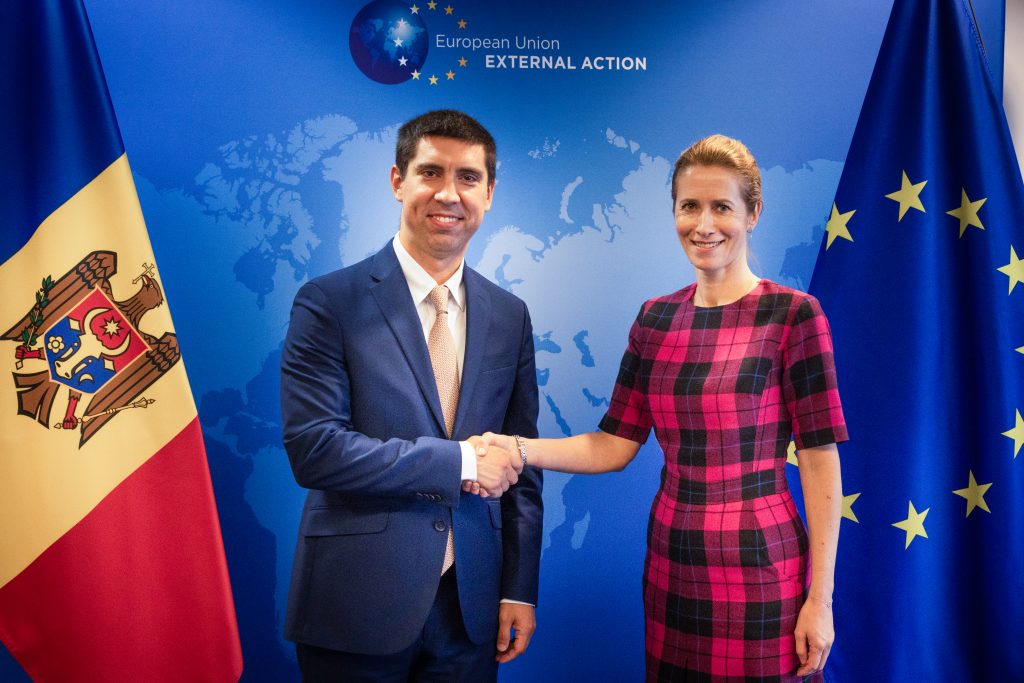
 From the ENJ magazine, no1/Dec 2025: Moldova’s foreign affairs minister provides insight into the hybrid war Russia is waging against his country, Moldova’s strategy to reduce vulnerabilities, and how the overwhelmingly pro-European population defended democracy in the last elections.
At the end of the Cold War, the strategic vision of the Russian authorities was to maintain Eastern Europe as the prototype of a neutral (militarily non-aligned) zone and to exert asymmetrically dominant influence on the former states of the USSR. This did not happen due to the desire of most Eastern European countries to become members of the European Union and NATO.
Since then, Russia has changed its strategy and, following the annexation of Crimea in 2014, launched a largescale campaign designed to influence the political, social, and security affairs of Eastern European countries in its favour.
The means of Russian interference are many and varied: from political influence and destabilisation, information warfare and disinformation campaigns to interventions and economic pressure. Russia has effectively used, controlled or influenced media to spread anti-western narratives in Eastern European countries with the aim of weakening trust in pro-European parties and strengthening political forces aligned with Russia’s strategic vision of international relations based on spheres of influence.
Moldova’s independence under Russian attack
Moldova’s case is unique. Our independence was hard-won, in the face of economic and political hardships and a Russian backed conflict in the eastern part of the country. Whenever the Moldovan people democratically exercised their free and independent choice, the Russian authorities immediately struck back with coercive diplomacy: cutting or reducing gas supply, banning our wine and agricultural products, stirring up the Transnistrian region and artificially generating tensions in the autonomous region of Gagauzia.
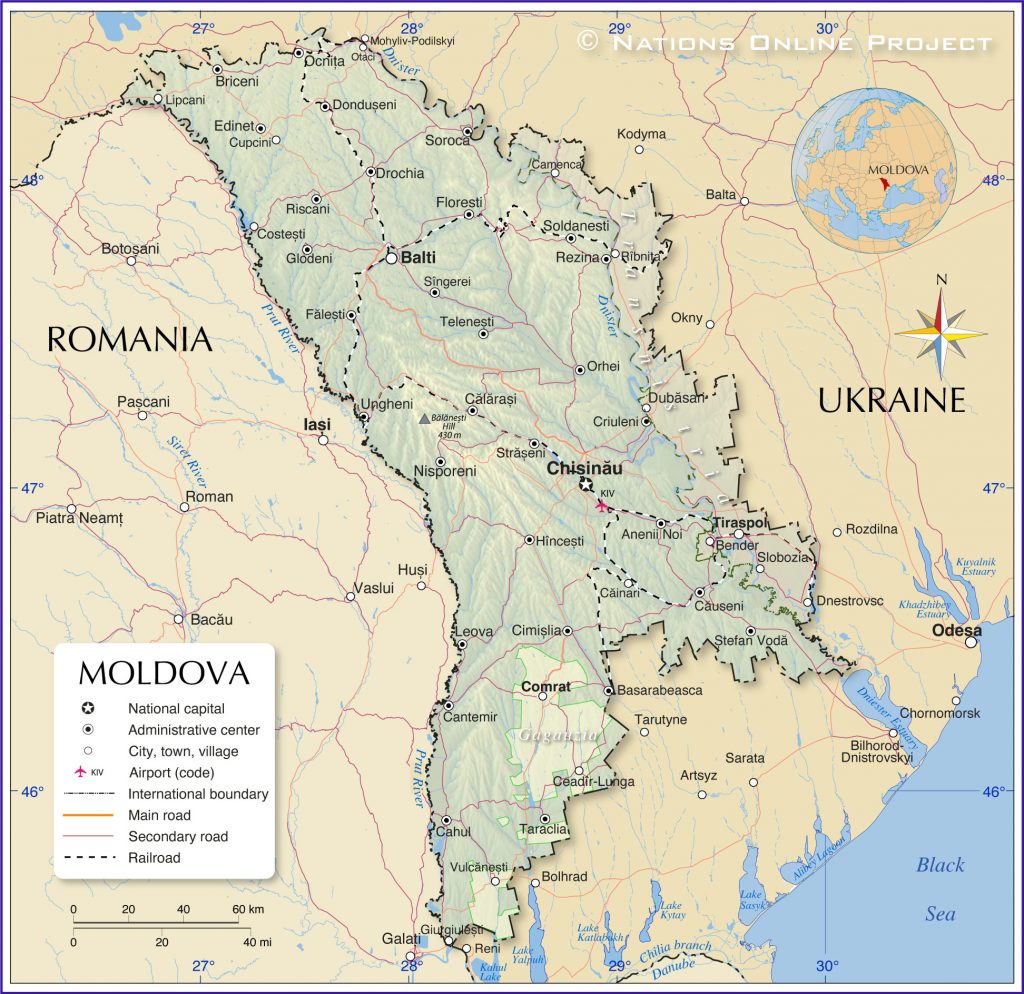
More recently, we have been facing hybrid warfare on a scale unseen before the full-scale invasion of Ukraine in 2022. In the referendum on European integration and the last two elections in 2024 and 2025, the Republic of Moldova faced unprecedented attacks on its statehood and independence, largely manifested through Russian-backed illegal financing of certain political parties, disinformation and propaganda, cyber-attacks, etc. Millions of euros have been spent to destabilise the political and social situation in the country. People were bombarded daily with lies and fake news. Furthermore, hundreds of individuals were paid and trained outside the country to provoke disorder and violence and spread fear.
“We have been facing hybrid warfare on a scale unseen before the full-scale invasion of Ukraine.”
Resisting Russian pressure
However, the Republic of Moldova has managed to counter this massive hybrid offensive, demonstrating institutional maturity. The authorities have maintained stability in the country and the security of their citizens through consolidating national resilience, reforming and strengthening the state institutions, and, importantly, ensuring the integrity and proper functioning of democratic processes.
In this regard, the Moldovan people will remain grateful to its international strategic partners for helping our country to become more resilient and secure.
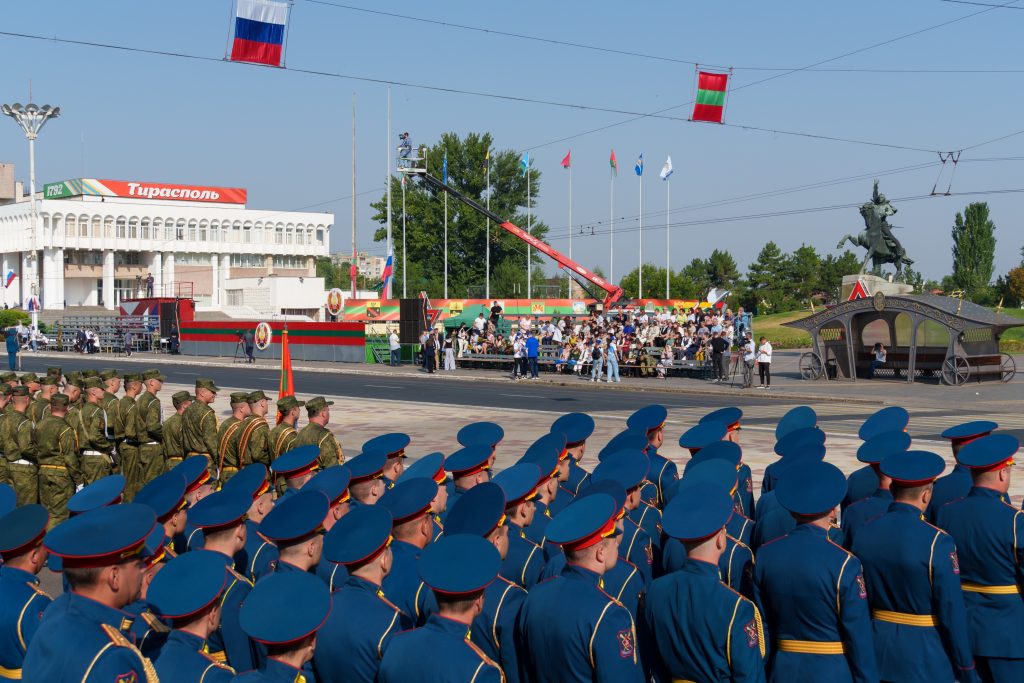
of Transnistria’s ‶independence″, Tiraspol, 2 September 2025 © Shutterstock/s_oleg
A big electoral cycle began with local elections in 2023, continued with presidential elections in 2024 and ended with the parliamentary elections of 28 September 2025. With the highest voter turnout (52.2 %) of the last three parliamentary elections, they have reaffirmed the Republic of Moldova as a pro-European society. Almost 70 % of voters opted for parties they deem to be pro-European. The governing party won more than 50 % of votes. Three other parliamentary parties/blocs which claim to be pro-European, won a combined 20 % of votes.
Lessons learned by Moldova
Democracy cannot be taken for granted and must be protected and defended when challenged. Despite unprecedented foreign pressure and interference, the Moldovan people have defended democracy through free, fair and competitive elections. This was not only a political contest but also a test of social resilience and political maturity – of whether a small nation can withstand relentless foreign attempts to destabilise, divide, and erode trust in its democratic institutions. We are proud to affirm that Moldova has passed this challenging test.
“Democracy cannot be taken for granted and must be protected and defended when challenged.”
The main lessons Moldova learned is that every vulnerability and every dependency can be weaponised and used against a state. Small countries such as Moldova are especially exposed. Therefore, our main task in the future is to work hard to eliminate our vulnerabilities and reduce our dependencies and sensitivities in all areas – energy, transport, food security, financial system, cyber and social.
Reducing energy dependence
Energy dependence on the Russian market was for many years one of our main strategic vulnerabilities. Therefore, Moldovan authorities set out as a top priority to strengthen energy security and resilience by diversifying sources of supply based on international free market principles and by excluding asymmetrical dependency risks. As a result of the legislative reforms implemented in recent years, the natural gas market in the Republic of Moldova is undergoing a major transformation.
The country has gradually liberalised the market so that today it no longer depends on gas from the Russian Federation. To strengthen the connection with the EU’s power network and reduce the dependency on electricity produced in the Transnistrian region, another political leverage, the Republic of Moldova has accelerated its integration with ENTSO-E, benefiting from imports from Romania and other EU markets. Moldova has continued to develop interconnectivity infrastructure to achieve full integration with the EU energy market.
Moreover, in economic terms, we continue our efforts to integrate into European markets which is the destination of about 67 % of our exports.
Combatting propaganda
In 2023, the Moldovan authorities established the Centre for strategic communication and combating propaganda, which has gradually become operational. Its mission is to coordinate the state’s policy in information security and combat disinformation at the national level, information manipulation and foreign interference. In addition, a national Cyber Security Agency was established at the end of 2023 to enforce state policy in the field of cyber security, the protection of critical information infrastructure, and ensure a high level of security in networks and service providers’ IT systems. Overall, these institutions have started successfully combatting hybrid threats.
Enhancing security
Over the last 3 years, the Republic of Moldova has developed and adopted a triad of important documents regarding state security – the National Security Strategy, the National Defence Strategy and the National Military Strategy. Alongside them, in sectoral areas, the new Information Security Strategy was adopted, and the new Cyber Security Strategy has been examined by state institutions and will be proposed to the newly elected Parliament for approval.
An unwavering pro-European stance
Today, we can affirm that, after a difficult period from 2022 to 2025, Moldova has become a more resilient and credible partner in the international arena. The results of the 2025 parliamentary elections clearly reconfirmed Moldova’s pro-European stance, offering a historic window of opportunity for our country to join the EU and become part of the wider European community.
The election results reaffirmed political support for our strategic vision that implementing European and Euro-Atlantic democratic standards, principles and values is the most effective way to achieve political, economic and social modernisation of the country and transform Moldova into a stable and credible partner, which will also contribute to strengthening European security.
Today, Moldova is undergoing extensive reforms, especially after the opening of EU accession negotiations. Key reforms include strengthening the judiciary, improving public procurement, ensuring energy security, and modernising digital and social infrastructure.
However, any failure to consolidate the recent election victory and accelerate Moldova’s integration into the EU may result in a massive shift towards populists, which would favour Russia’s interests. This, in turn, would have far-reaching security consequences for the region.
“Any failure to consolidate the recent election victory and accelerate Moldova’s integration into the EU may result in a massive shift towards populists, which would favour Russia’s interests.”
Moldova therefore counts very much on deepening its international partnerships in this domain to accomplish the goal of joining the EU on time and to remain a factor of stability and security in Europe.