By Gerhard Arnold, Würzburg
Our expert on the Middle East describes why the two neighbours and former allies have increasingly become adversaries in recent years.
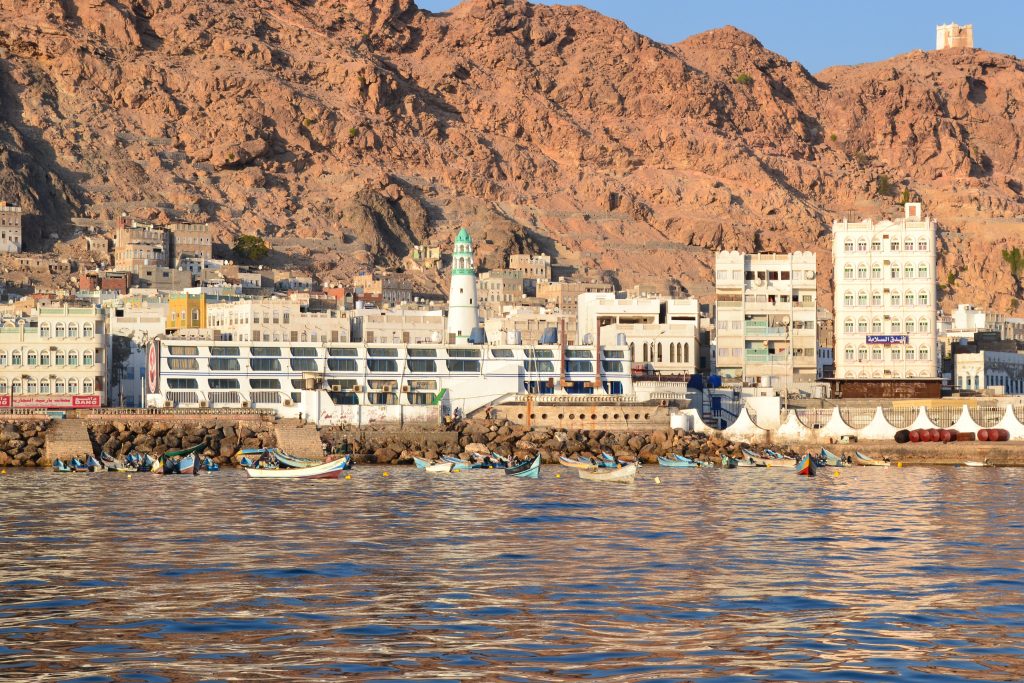
The air strike on the port of Mukalla (Yemen)
On 30 December 2025, Saudi fighter jets bombed the port of Mukalla in Yemen. The targets were military vehicles that were being unloaded from a ship from the United Arab Emirates (UAE). According to the Saudi account, the UAE leadership wanted to make these vehicles available to the Southern Transitional Council (STC) for its military operations.
The STC is a political and military group that is part of the official government of Yemen and has been supported by the UAE and Saudi Arabia for years, including in the fight against Houthis, an armed Islamist group, which has occupied and controlled the north-west of the country for ten years. In 2015, Saudi Arabia and the UAE launched massive military operations against them, so far without resounding success.
Diverging interests
The STC has increasingly represented separatist interests, much to the displeasure of the Saudi leadership. While the latter advocates for a unified Yemen under the legal government and wants to end the civil war for its own security, the Emirati leadership has other interests. With the help of the STC, it has established itself in the port city of Mukalla, with small ground forces among others. The city is strategically important (oil transport, important trade routes to the interior of the country); from there, it is easy to control shipping traffic through the Red Sea.
The UAE is pursuing conspicuous power politics around the Arabian Peninsula, which the Saudi leadership does not particularly like. To do so, it needs a base in south-eastern Yemen. Since the beginning of December 2025, the STC’s combat units have made surprisingly big advances in eastern Yemen, from the coastal area in the north to the Saudi border. They have taken control of the transport links in the large province of Hadramaut, and this crossed Saudi Arabia’s red line, violating the country’s fundamental security interests according to its leadership.
“The UAE is pursuing conspicuous power politics around the Arabian Peninsula, which the Saudi leadership does not particularly like.”
Economic competition
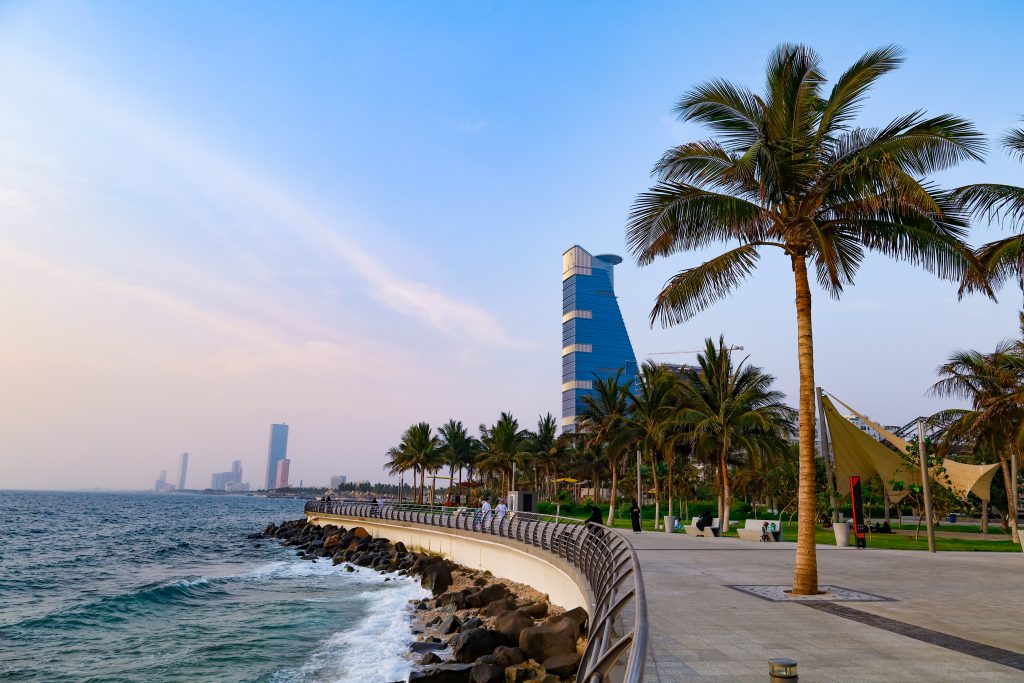
The massive confrontation between Saudi Arabia and the UAE had been gradually developing since 2020. It involves two different areas of conflict. On the one hand, the modernisation ambitions of Saudi crown prince Mohammed bin Salman led to increasing economic competition.
One example is his plan to turn his country into the largest tourism hub on the Arabian Peninsula after the end of the coronavirus pandemic, which caused discontent in the UAE, the region’s major tourism centre for decades. Added to this is his 2021 measure to force large companies previously based in the UAE to relocate their headquarters to Saudi Arabia. This, too, was an affront to the Emiratis, and began to strain relations between the two sides.
Serious foreign policy conflicts of interest
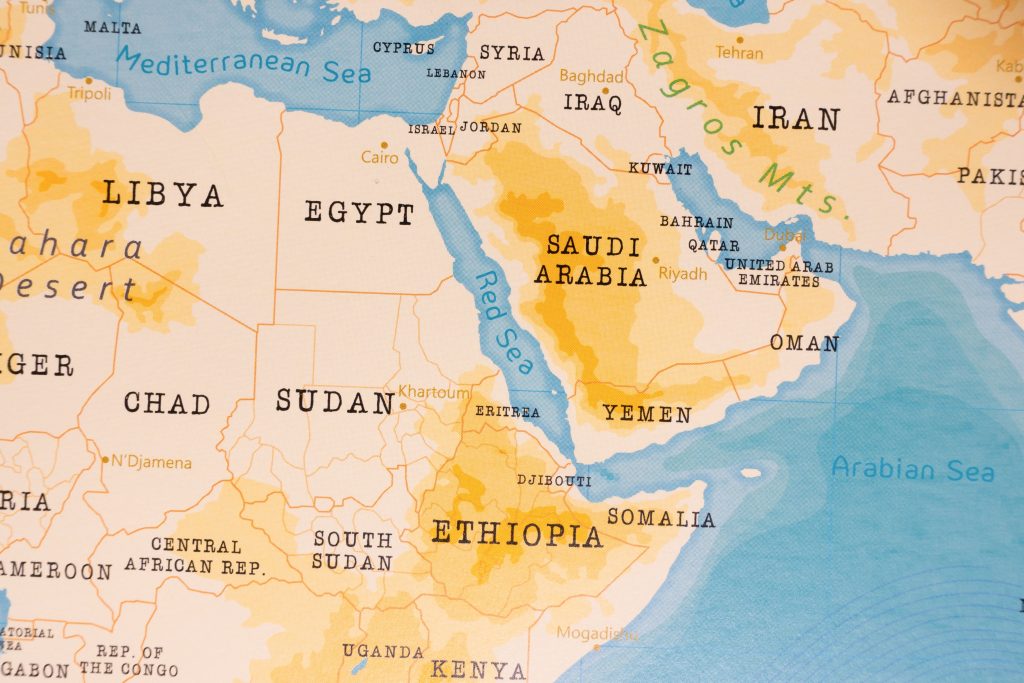
In the area of foreign policy, the strategic differences in interests have become increasingly apparent, even turning into contradictions. In 2017, the neighbours were still in agreement on taking political and economic action against Qatar for its strong support of Islamic extremist groups, imposing a complete blockade on the super-rich oil-producing country. However, due to their lack of success, Prince Mohammed single-handedly ended the boycott measures in 2021, much to the chagrin of the Emirati leadership.
In August 2020, after intensive mediation by US President Trump, the Abraham accords were concluded between Israel and the UAE, as well as with Bahrain. They included the mutual establishment of diplomatic relations and the development of economic and technological cooperation. This displeased the Saudis, who adhered strictly to the common Arab line of political recognition of the state of Israel only after the establishment of a two-state solution in Israel/Palestine.
After the surprising political upheaval in Syria in December 2024, the Saudi leadership quickly approached the new ruler, former Islamist leader al-Sharaa, and offered him comprehensive reconstruction aid for his country. However, Abu Dhabi remained suspicious because of its deep aversion to religious extremism and terrorism.
“In the area of foreign policy, the strategic differences in interests have become increasingly apparent, even turning into contradictions.”
Two other conflict areas are Libya and Sudan. The general consensus among experts is that the UAE is providing military support to the rebels of the Rapid Support Force (RSF) – whose serious war crimes against the civilian population last year caused international outrage, – the main reason being gold mining in the RSF areas, from which the UAE benefits with its old gold trading centre in Dubai.
Egypt and Saudi Arabia, on the other hand, support the legitimate Sudanese government in Khartoum. In Libya, too, the UAE supports the separatist government under warlord General Khalifa Haftar, while Saudi Arabia sides with the internationally recognised government in Tripoli. Once again, the UAE’s interest in combating Islamist groups in Libya plays a role, but so does its desire to gain political influence on the north African coast through the militarily successful Haftar.
Can the power struggle be resolved?
In the now dangerously escalated conflict between Saudi Arabia and the UAE, the Saudi crown prince’s ambitions for power far beyond the Arabian Peninsula clash with the strategic interests of the UAE. Saudi Arabia, with its 23 million inhabitants and the largest economy in the region, has so far regarded the Emiratis, with only 1.2 million inhabitants and a much smaller territory, as nothing more than a junior partner. In contrast, the extremely self-confident ruling family in Abu Dhabi sees itself as the leading cultural power and a model of development for the whole of Arabia.
International observers are concerned: if the neighbours do not quickly agree on prosperous relations and compromises in their strategic interests, the Middle East will suffer massively from their ongoing conflicts.
 Our Middle East expert Gerhard Arnold is a German protestant theologian and publicist who has issued numerous monographs and essays on church history, peace ethics and international security policy. © private