Guest commentary by Jean-Dominique Giuliani, President of the Robert Schuman Foundation, Paris
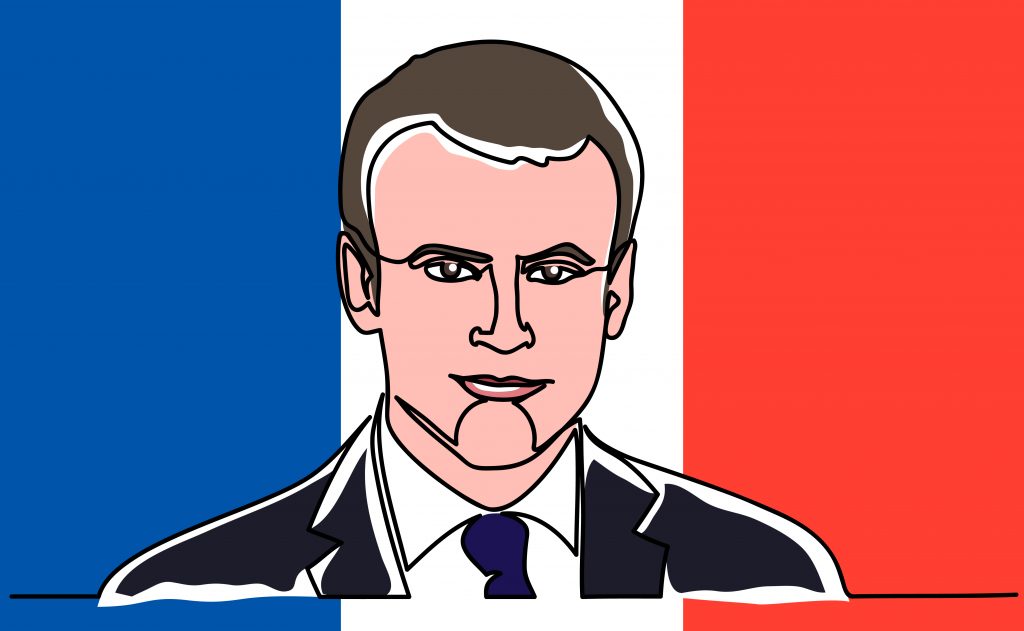
Emmanuel Macron’s speech on 2 March 2026 marks a major shift in French nuclear doctrine in the interests of enhanced European security.
The fundamentals of France’s robust, effective and independent deterrent have been the subject of broad national consensus since the 1950s, as demonstrated by political responses in France.
A pillar of France’s defence strategy, its nuclear deterrent is credible, respected, recognised as such and operational. It is a guarantee of stability and peace.
The reassertion of the complementary nature of conventional forces and nuclear weapons – specialists refer to this as “shouldering” – opens up real prospects for defence cooperation in Europe at a time when all EU Member States have embarked on a spectacular rearmament programme.
The strengthening of France’s nuclear deterrent capabilities is a response to threats, proliferation and the rise of new nations in this field, while reminding us that any state that attacks France, “however powerful it may be, (…) however vast it may be, will not recover”.
The opening of in-depth discussions on European security with a number of European partners highlights France’s new concept of “forward deterrence”, which takes the current situation into account. The security of a European country cannot stop at its borders. Considering the continent’s territory as a new “strategic depth” helps to bolster deterrence and security for all.
Several Member States have already shown interest by engaging in these exchanges and, in some cases, by signing agreements with France. While these agreements are long-standing with the United Kingdom, they are new with Germany, Denmark, the Netherlands, Belgium, Poland, Greece and Sweden.
This points to a strengthening of European security with concrete advances expected towards autonomy that does not call NATO into question but gives European solidarity expression in defence that has never been achieved before.
This French development could well, in the long term, constitute a veritable European revolution.
 Jean-Dominique Giuliani has been the President of the Robert Schuman Foundation since 2000. © Vernier /JBV NEWS | www.jd-giuliani.eu | www.robert-schuman.eu
+++++++++++++
Joint declaration of President Macron and Chancellor Merz of 2 March 2026
“In the spirit of their close partnership as set out in Article 4 of the Treaty of Aachen, France and Germany have decided to enter into closer cooperation in the field of deterrence in response to the evolving threat landscape.
France and Germany have established a high-ranking nuclear steering group that will act as a bilateral framework for doctrinal dialogue and the coordination of strategic cooperation, including consultations regarding the appropriate mix of conventional, missile defence and French nuclear capabilities. France and Germany have agreed to take first concrete steps beginning this year, including German conventional participation in French nuclear exercises and joint visits to strategic sites as well as development of conventional capabilities with European partners. France and Germany will also increase their ability, as Europeans, to manage escalation beneath the nuclear threshold – in particular in the fields of Early Warning and Air Defense and Deep Precision Strike.
“This Franco-German cooperation is based on the shared understanding that the nuclear dimension of deterrence remains a cornerstone of European security”.
This Franco-German cooperation is based on the shared understanding that the nuclear dimension of deterrence remains a cornerstone of European security, relying on US extended deterrence, including US nuclear weapons forward-deployed to Europe, and on the independent strategic nuclear forces of France and the United Kingdom, which have a deterrent role of their own and contribute significantly to the overall security of the Alliance. This Franco-German cooperation will add to, not substitute for, NATO’s nuclear deterrence and NATO’s nuclear sharing arrangements, to which Germany contributes and will continue to contribute. France and Germany will continue to comply with their obligations under international law including the Treaty on the Non-Proliferation of Nuclear Weapons.
In light of their strong commitment to Article 5 of the North Atlantic Treaty and Art. 42 (7) of the Treaty on European Union, Franco-German cooperation aims at strengthening the systems of collective security both countries belong to. It aims at enhancing Europe’s security as a whole. Special attention will be given to coordination with the United States, the United Kingdom, other Allies and NATO.”