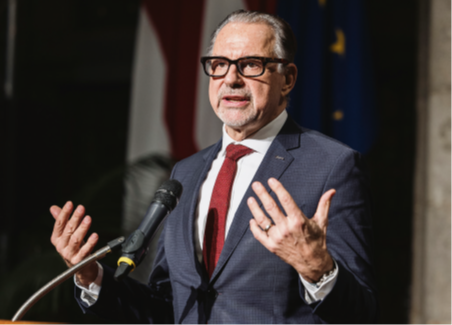
Interview with DR JOSEF ASCHBACHER – Director General of the European Space Agency (ESA), Paris
 From the ENJ magazine, no1/Dec 2025: European News Journal asked the Director General of the European Space Agency (ESA) about the agency’s new stance on defence issues and how to promote space safety, on cooperation with NASA under the Trump administration and whether Europe was ready to explore Mars.
Dr Aschbacher, ESA is an international organisation created to promote, “exclusively for peaceful purposes, cooperation between European states in space research, technologies and their applications,” as stated in the ESA Convention. However, ESA is becoming increasingly involved in European defence, a long-time taboo subject for some ESA member states. How have you managed to convince your partner countries to endorse this change in attitude?
Josef Aschbacher: Let me mention that most space activities and capabilities are inherently dual-use serving both civilian and military purposes. ESA has long been involved in dual-use and security-related activities, with programmes such as Copernicus/Security Services and Galileo/Public Regulated Service (PRS).
The reference to “peaceful purposes” in Article II of the ESA Convention forbids aggressive activities that are a threat to peace, or a breach of it, however it does not restrict ESA’s capacity to develop defensive dual-use technologies.
ESA’s involvement in security and defence matters is always based on decisions of its member states. I believe that the importance of security and defence is increasingly evident, and that the evolution of mentalities among our member states reflects this shift.
You recently revealed, in the presence of Commissioner for Defence and Space Andrius Kubilius, the European Resilience from Space (ERS) programme. This network of most modern Earth observation satellites with computing and artificial intelligence capabilities will enable the collection of high-resolution geo-intelligence data every 30 minutes instead of once a day. What can this major dual-use project, requiring €1bn in funding, concretely contribute to Europe’s defence and strategic autonomy?
Josef Aschbacher: European strategic autonomy requires striking the right balance between national, collective, and commercial space systems.
National defence-related space capabilities unquestionably respond to national interests and the need for sovereignty. However, even if all European national assets were combined, the temporal coverage would be far from sufficient to meet the needs for very frequent and global coverage. In addition, many member states do not have their own satellite infrastructure.
“Without space, there will be no defence readiness.” Andrius Kubilius, 28 November 2025
A collective framework, such as ERS/EOGS (Earth Observation Governmental Service) can provide an essential supplement to national infrastructure, especially when combined with commercial systems.
According to the ESA Space Environment Report 2025, around 40,000 objects are currently being tracked in Low Earth Orbit (LEO), including more than 11,000 active satellites. The growing amount of space debris increases the risk of collisions. Asteroids could also hit Earth at any time. How is ESA addressing these global safety issues?
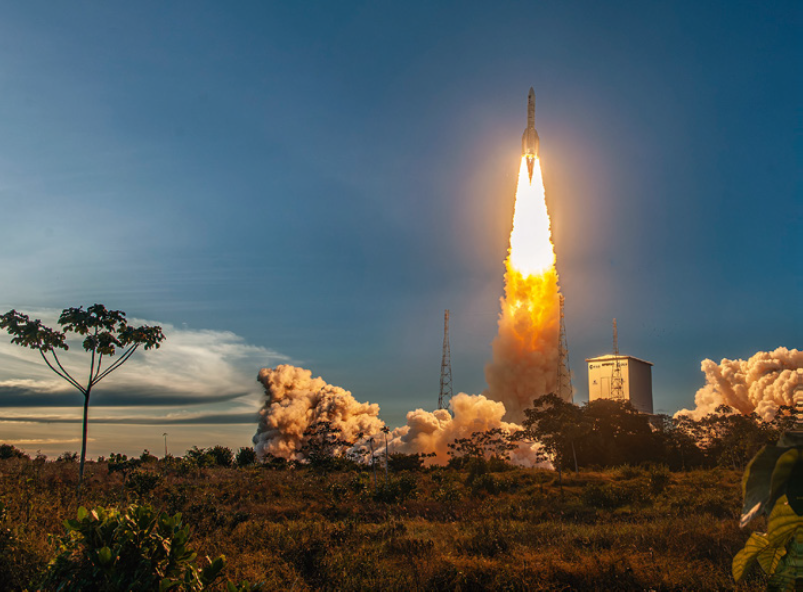
Josef Aschbacher: Our priority is to limit the exponential proliferation of debris threatening critical space infrastructure. ESA leads by example with its zero debris approach – aiming for all missions designed after 2030 to be debris neutral – and by supporting the community-led Zero Debris Charter. As of now, the charter has over 180 signatories across 33 countries.
Looking ahead, ESA is pioneering a circular space economy: repairing, refuelling, recycling, and manufacturing in orbit to enable sustainable operations.
For planetary defence, ESA is advancing asteroid threat detection and mitigation. Hera will assess the impact of NASA’s Double Asteroid Redirection Test (DART) on the Dimorphos asteroid, while ESA’s Ramses mission will rendezvous with the Apophis asteroid for a complete monitoring of its 2029 Earth flyby.
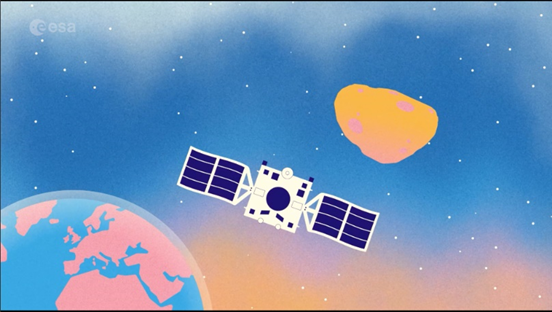
Video: ESA’s Ramses mission to asteroid Apophis
Let us come to the ESA budget. At the ESA Ministerial Council meeting in Bremen, Germany, at the end of November 2025, member states adopted a budget of €22.3 bn for the coming years, an increase of 31 %. Congratulations!
Josef Aschbacher: The need to increase Europe’s space budget is driven by the realisation that Europe must make big investments in space to avoid falling behind and remain globally competitive. Currently, the United States accounts for approximately 60 % of global public space funding, China 15 %, while Europe contributes only around 10 % – roughly one-sixth of the American share. On the other hand, the global space economy, which is worth about €500bn today, is predicted to increase to €1.8tn in the next decade, a growth of 9–10 % per year. Europe cannot miss this opportunity to participate in such a fast-growing sector.
If the drastic NASA budget cuts of approximately 24 % proposed by US President Trump were confirmed, how would you plan to continue programmes that previously depended on NASA?
Josef Aschbacher: Let me make it clear that most ESA programmes will not be affected by decisions on the NASA budget. We are assessing potential implications and scenarios with our member states, while maintaining close contact with our long-standing international partners. ESA is making every effort to meet its obligations arising from the international agreements with our US partners. At the same time, Europe is increasing its resilience and will increase its technological autonomy.
Turning to the future, ESA explores promising new ideas and concepts through its discovery activities, encouraging investment in potentially game-changing technologies and disruptive innovation. What are the possible applications and who will benefit from them?
Josef Aschbacher: With ESA Discovery, we support European innovators from academia and industry to drive disruptive space innovation. We fund early-stage research and technology development across all space domains, with a focus on AI-driven autonomy, in-space manufacturing, quantum applications, and sustainability.
Projects (all available in detail on activities.esa.int) include radiation shielding using Martian materials, beam-steering antennas for CubeSats, a miniaturised all optical ultracold atom source for quantum sensors, manufacturing electronic components in space, self-healing composites, novel ways to grow food in space, and many more. They are the foundation for many of ESA’s technology developments.
And how do you see the competition between the United States and China regarding the moon and Mars? What is Europe’s approach?
Josef Aschbacher: ESA, within a broader European context, focuses on strategic autonomy, sustainability, and scientific excellence. Compared to the US and China, Europe leads in some key areas: Galileo, which provides the world’s most accurate navigation signal; Copernicus, the global standard for Earth observation; and space science missions like Euclid, Gaia, and JUICE.
Looking at the moon and Mars, ESA’s 2040 strategy outlines our roadmap for the years ahead.
Can you give us further details?
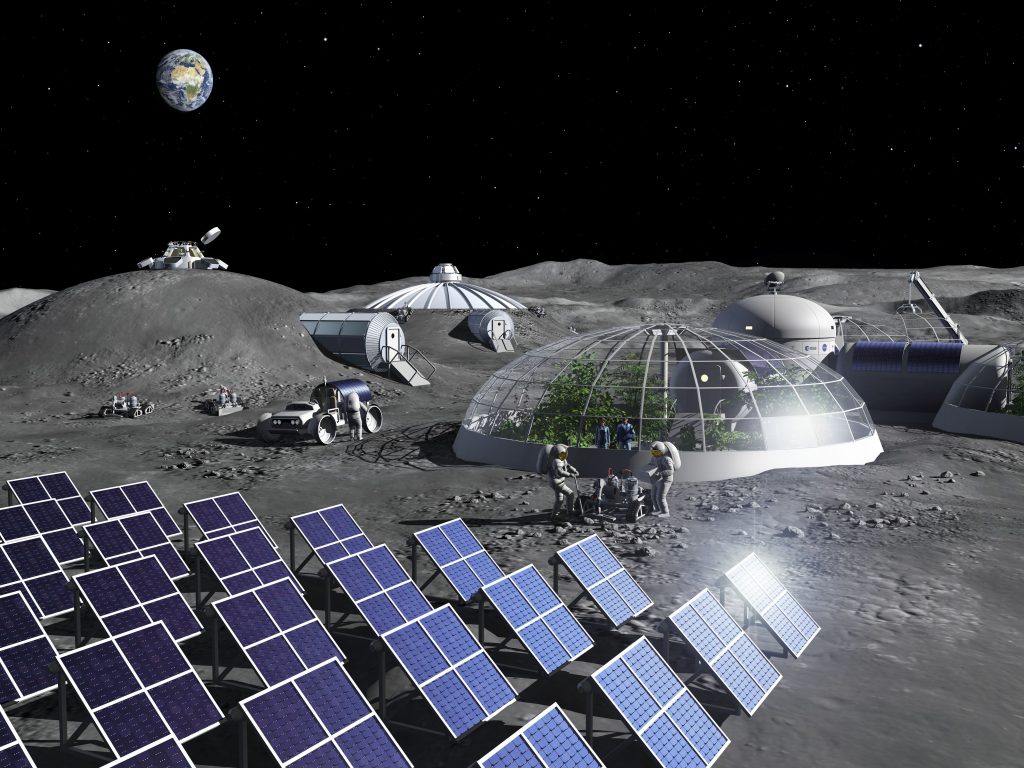
Josef Aschbacher: A lunar economy will likely emerge – with regular cargo and astronaut flights, lunar communications and navigation networks, and technologies for in-situ resource utilisation – like converting lunar materials and building habitats. For LEO, ESA is developing the LEO Cargo Return Service, a transport system designed to deliver cargo to and from space stations.
On the moon, ESA is accelerating its roadmap with Argonaut, a fully European lunar lander capable of delivering up to 1,800 kg of cargo.
On Mars, the missions ExoMars Rosalind Franklin and ZefERO will accelerate exploration and map resources to support future human activity. The former will be the first mission to drill up to two metres below the surface, searching for potential traces of life.
ESA’s efforts sustain both European ambition and international cooperation at the same time.
“ESA, within a broader European context, focuses on strategic autonomy, sustainability, and scientific excellence.” ESA Director General Josef Aschbacher
Dr Aschbacher, thank you very much for these insights.
The interview was led by Hartmut Bühl and Nannette Cazaubon.