A report from Barcelona by NANNETTE CAZAUBON – European News Journal, Paris
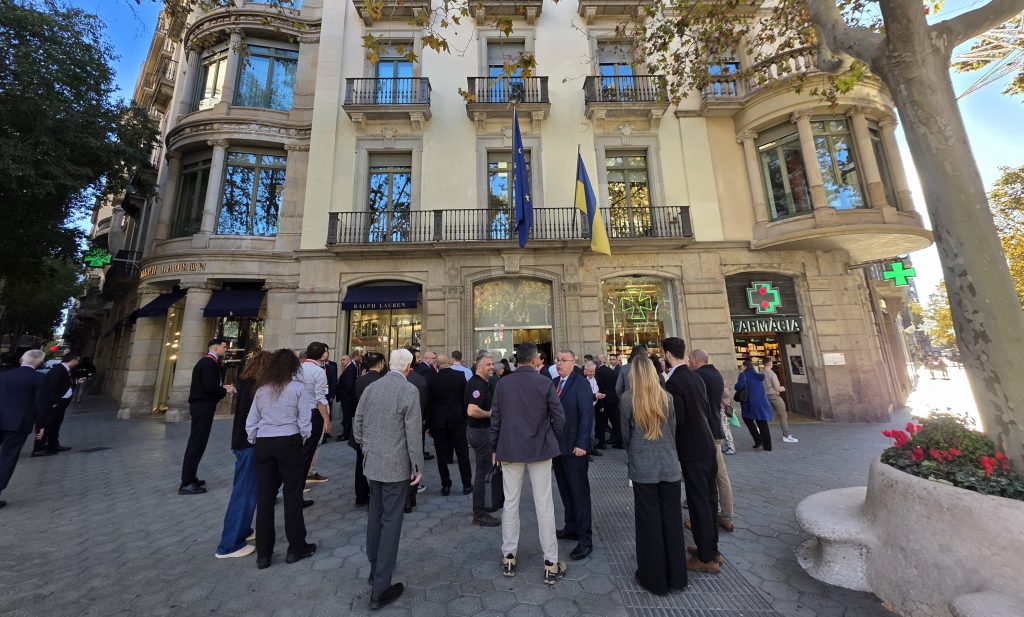
Barcelona © ENJ
From the ENJ magazine, no1/Dec 2025
At the end of November 2025, together with our journal’s editorial director Hartmut Bühl, I embarked on a train trip from France’s snowy north to the milder climate of north-eastern Spain. Our destination was Barcelona, where we participated in two Euro-Mediterranean civil protection events, both held at the European Commission Representation, opposite Gaudí’s architectural masterpiece, Casa Milà.
PPRD Med 4th Steering Committee
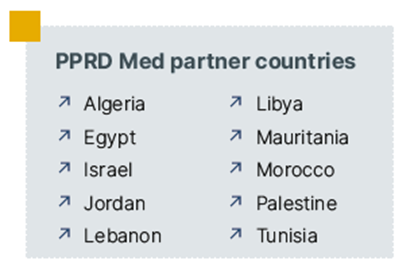
The first event was the 4th Steering Committee (SC) meeting of the programme “Prevention, Preparedness and Response to natural and man-made Disasters in the Southern & Eastern Mediterranean” (PPRD Med) linking the European Commission’s DG ECHO with the Union for the Mediterranean (UfM) and the Union Civil Protection Mechanism (UCPM). This remarkable initiative promotes the use of Earth observation satellite imagery and new technologies to make the Mediterranean region more resilient towards natural and man-made disasters.
Having followed PPRD Med since its beginnings two years ago, we were concerned that the current geopolitical context, affecting several of its 10 partner countries, might jeopardise its progress. There was none of that. The 4th SC showed that, despite the postponement of some activities, the project stays on track thanks to its flexibility.
The lessons learned and progress achieved over the past two years were highlighted, including the successful country-specific and cross-border pilot projects (floods, dam security and cascade effects) involving space technologies and simulation tools.
In PPRD Med’s final phase, running until June 2026, standard operating procedures (SOPs) will be developed and training provided to enable the translation of collected scientific and satellite data into operational tools for use in the field in partner countries.
The idea of a “PPRD Med 2” project was in the air. Team leader Philippe Geffroy confirmed that any follow-up programme would again focus on disaster preparedness, with an emphasis on new technologies.
Workshop on wildfires
The following day, we participated in the 2nd Euro-Mediterranean workshop on wildfires, co-organised by DG ECHO, the UfM and PPRD Med with the objective of deepening discussions on cross-border response mechanisms and strengthening operational coordination in anticipation of the 2026 wildfire season.
The intense and highly informative workshop presented lessons learned from major wildfires and highlighted national and cross-border prevention and response mechanisms. However, it was also somewhat worrying, as it became clear that the longer wildfire seasons and the phenomena of large fires of exceptional intensity are pushing operational resources and first responders to their limits.
In this context, new technologies and artificial intelligence (AI), including satellite-based monitoring systems, AI prediction models, drones and digital communication platforms, will play an important role in improving fire prediction, early detection and operational decision-making, as was emphasised by the experts.
Discussing the outcomes of the two events on the train back to Paris, Hartmut and I were both convinced that, especially in the tied geopolitical situation, the only way forward lies in even closer Euro-Mediterranean cooperation.
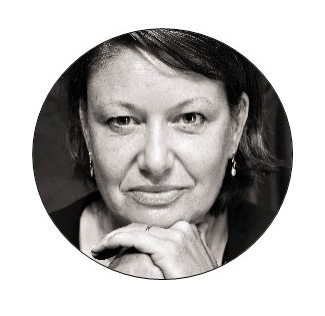 Senior editor Nannette Cazaubon is European News Journal‘s co-founder