By MICHAEL HOFFMANN – Marketing Manager, Blücher GmbH, Erkrath
From the ENJ magazine no1/Dec 2025 (industry contribution)
In the current geopolitical context and tense security landscape, characterised by conflict and war but also by an increasing number of large-scale natural disasters, the threats posed by chemical, biological, radiological and nuclear (CBRN) materials are evolving rapidly.
While these materials have enabled advancements in fields such as medicine, industry, and energy, they can also pose serious risks to health, the environment, the economy, and security.
Chemical accidents, radiation exposure, deliberate biological attacks, the uncontrolled spread of emerging diseases, and the use of chemical or biological weapons in wartime are just a few examples.
First responders and military personnel deployed to crisis areas are often exposed to a large variety of harmful substances that pose long-term health risks, as many of them can be toxic, carcinogenic, mutagenic or harmful to fertility.
“First responders and military personnel deployed to crisis areas are often exposed to a high number of harmful substances”.
Increase of CBRN threats in Ukraine
Conflicts and wars exacerbate CBRN threats, as the case of Ukraine shows, where these risks have increased significantly since Russia’s invasion in February 2022.
Firstly, Russia continues to destroy critical infrastructure in Ukraine, such as powerplants, and each attack releases a multitude of toxic chemicals in various forms, such as liquid solutions in water, gases, or aerosols.
Secondly, Russian military forces are suspected of using prohibited chemical weapons in Ukraine, including dropping riot control agents from drones to dislodge soldiers from their trenches and make them vulnerable, or to force them to wear respirators, thereby reducing their effectiveness and severely limiting their operational capabilities. The Organisation for the Prohibition of Chemical Weapons (OPCW) is continuing its investigation.
Protecting the people on the ground
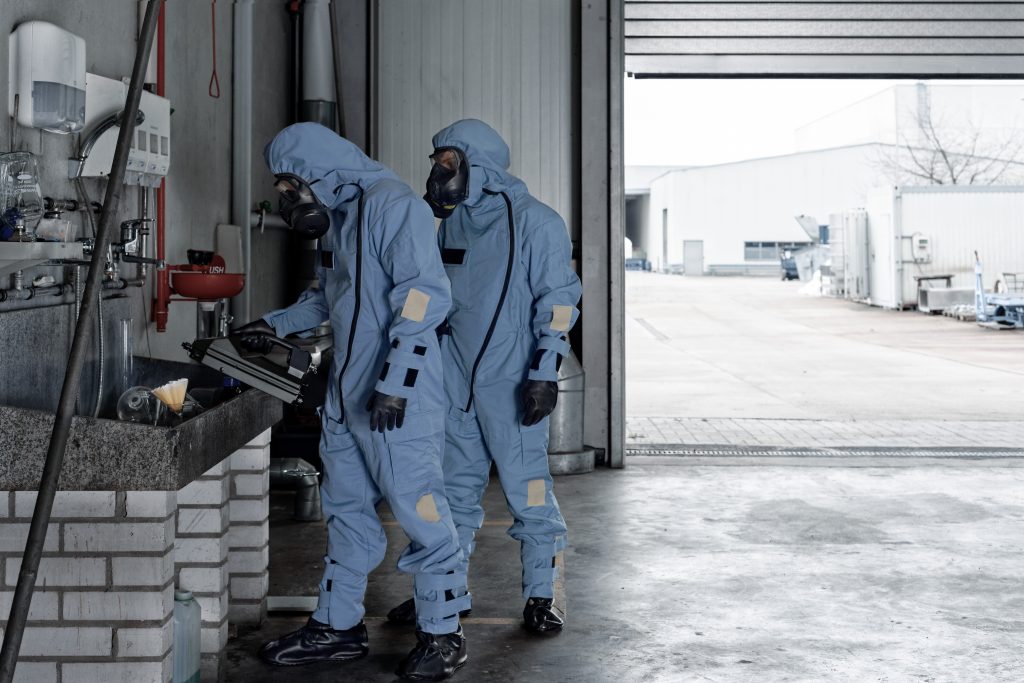
Protecting people on the ground in crisis and conflict zones has been our mission at Blücher GmbH for many years. A global market leader in permeable protective clothing systems for armed forces worldwide, Blücher also holds a leading position as a supplier of protective clothing for civil defence and emergency response. It is no coincidence that Blücher supplies protective clothing to the OPWC.
Blücher’s mission-oriented protective clothing systems, known as SARATOGA®, offer optimum protection against chemical warfare agents while maintaining operational capability and endurance. They are used worldwide by the military, civil defence, fire department and police as well as by international organisations. They allow users involved in war zones or CBRN incidents to perform their tasks safely. We have longstanding experience in material research and textile development. The core technology of Blücher protection systems is based on the use of sorptive compounds with high-performance spherical adsorbents manufactured in the company’s own production facility in Brandenburg, Germany.
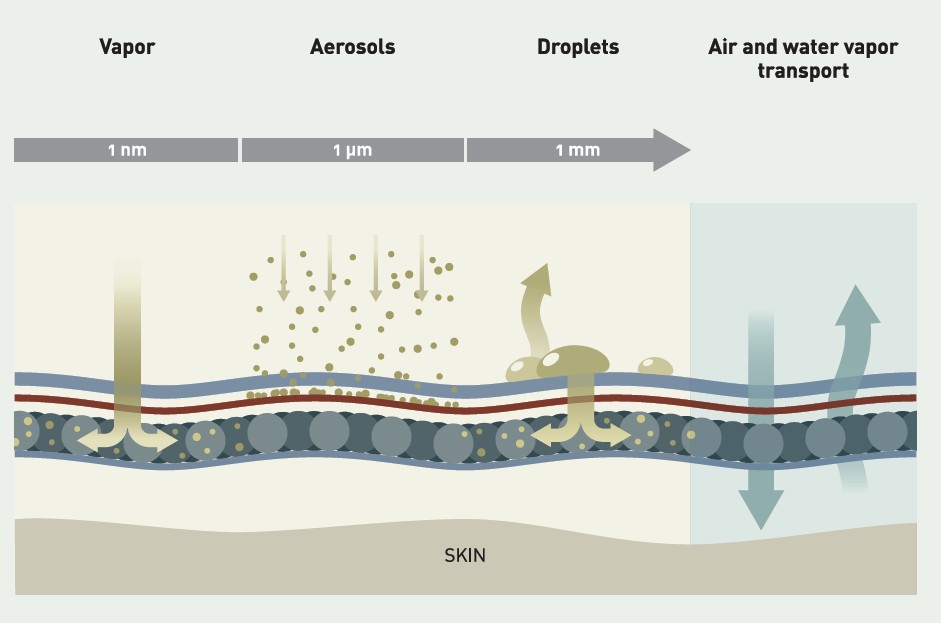
Graphic above: Operative principle of sorptive compounds with high-performance adsorbents. Adsorbents are adsorption agents made from activated carbon. The input material is a polymer that is turned into adsorbents in a chemical conversion process. In this process, the polymer is converted into carbon spheres, which have a significantly larger internal surface area than the starting material. The internal surface area of 5g of adsorbents is 7,140 square metres, equivalent to a football pitch. © Blücher GmbH
Rethinking strategies
Armed conflicts, such as in Ukraine, affect all aspects of CBRN protection – from the question of whether current technologies provide adequate protection, to the suitability of protective gear designs for new threat scenarios and finally to the need for clarifying the complex and sometimes conflicting landscape of regulations, directives and insufficient standards.
The growing use of unmanned aerial vehicles (UAVs) and drones enabling the use of aerosol bombs, which can be deployed with high precision over a limited area, reducing even the collateral risks to one’s own forces, introduces the potential for new release mechanisms for chemically based effectors. This may require a reassessment of current doctrines and training regimes such as defined in various NATO allied publications, and a shift in R&D strategies.
Adapting to the current risk landscape
At Blücher, we monitor these developments closely and have understood that time has come to widen or at least adapt the spectrum of protection to the analysis of the new threat scenarios. It is in this sense that Blücher has begun its own studies to determine where future R&D efforts should be directed and what consequences these new insights will have on production.
“Time has come to widen or at least adapt the spectrum of protection to the analysis of the new threat scenarios.”
Based on the developments described, the focus of R&D work on CBRN protective clothing will be determined by specific drivers such as the compliance of products, their components and manufacturing processes with existing and upcoming regulatory restrictions, such as the future non-use of per- and polyfluoroalkyl substances (PFAS) in materials. Our engineers are evaluating the potential adaptation of innovative technologies as reactive materials to be implemented into protective systems to potentially enhance their protection or extend the lifecycle.
Our clients are demanding and expect top performance from us in research and development and its implementation in production. They also know that we can deliver it.
Blücher GmbH BLÜCHER is the leading company in the development and production of adsorptive composite materials for protection against chemical and biological warfare agents. With over 50 years of experience, BLÜCHER stands for advanced engineering, analytical solutions and needs-based CBRN protection technologies and applications. www.bluecher.com/en |