By Lavinia Klarhoefer, Policy Advisor, Dr Beatrice Gorawantschy, Director of the Europe Office, and Jonas Althoff, Policy Advisor, Konrad Adenauer Foundation, Brussels
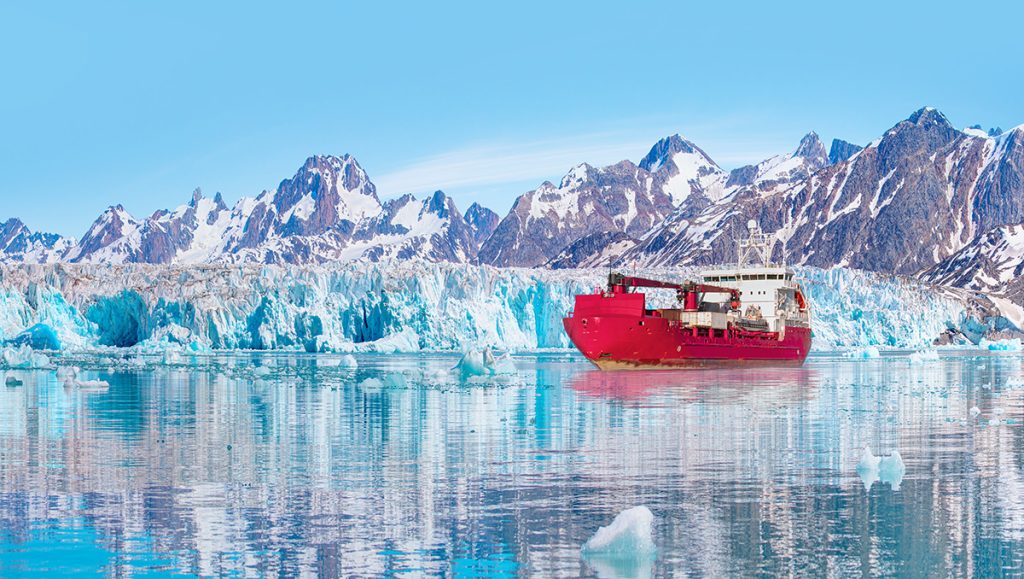
A “stronger and more active policy towards the Arctic”: that was the key message of the first EU Arctic summit in Rovaniemi, Finland, in mid-September 2026 – a clear indication that the Arctic is no longer seen as a remote space. The European Arctic is part of the European Union (northern Sweden and Finland) and of the internal market via the European Economic Area (northern Norway, Iceland), while Greenlanders are EU citizens via Danish citizenship. This is why geography matters: in the European Arctic, the EU is a primary actor.
EU law applies there, and EU funding for regional development, education and climate protection has shaped the region for decades. The EU’s role is more limited in the North American Arctic (Alaska, the Canadian Arctic), except in Greenland, where the EU is a key partner for sustainable development and societal resilience. The EU has recently stepped up its engagement in Greenland, opening an office in Nuuk in 2024 and announcing a €200m partnership package in September 2026. Furthermore, for the next MFF, the Commission proposes the doubling of Greenland’s allocation, including for connectivity, renewable energy and critical raw materials.[i]
“The Arctic is increasingly seen as a strategic theatre of great-power competition, driven mostly by trends emanating from outside of it.”
The EU is therefore well-advised to treat the Arctic as its own northern neighbourhood, like its southern and eastern ones: closely connected and strategically important for its geopolitical, economic and security interests – and to concentrate its engagement where it has the most impact: the European Arctic.[ii]
Europe’s north under geopolitical pressure
The Arctic is increasingly seen as a strategic theatre of great-power competition, driven mostly by trends emanating from outside of it. As climate change makes the region more accessible, the prospects of new shipping routes and easier resource extraction attract more non-Arctic actors.[iii] Since Russia’s 2022 full-scale invasion of Ukraine, and Finlan’s and Sweden’s NATO accession, military tensions vis-à-vis Russia have extended northwards and rattled regional cooperation. Europe is thus no longer involved in the Russian Arctic, accounting for roughly half of the Arctic coastline and population. Most recently, US President Donald Trump’s repeated calls for control over Greenland have laid bare the rupture in the rules-based order. Taken together, these developments show that Arctic security is European security – or, as German Chancellor Friedrich Merz put it at the closing press conference in Rovaniemi: “This region has become a geopolitical hotspot. Russia is building up its military capabilities here and … uses its presence for hybrid activities every day.”[iv]
Russia, China, and hybrid threats below the threshold That the north is crucial for Europe’s security is nothing new: the shortest route for Russian missiles to North America runs across the Arctic, and Russia’s largest nuclear arsenal, including its Northern Fleet, sits on the Kola peninsula next to northern Norway and Finland. Therefore, the US had a sizeable military presence in Greenland during the cold war and closely monitored the GIUK gap, the sea area between Greenland, Iceland and the United Kingdom. It is the strategic maritime chokepoint Russian naval forces from the Kola peninsula must pass through to reach the open north Atlantic.
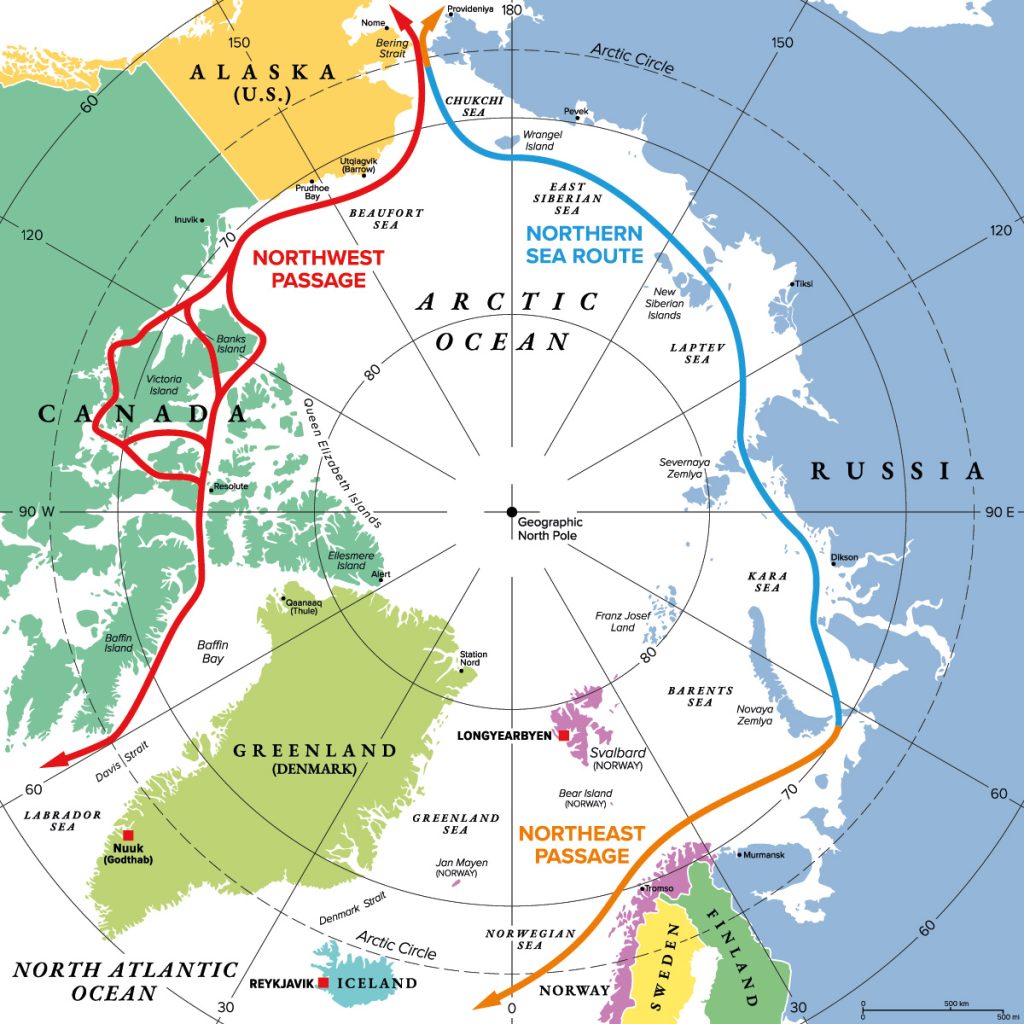
These military challenges remain, but Europe’s greatest security concern should be Russian and Chinese hybrid activities below the threshold of war: sabotage of critical subsea infrastructure, GPS jamming, dual-use research, disinformation and provocative military exercises. Since 2022, these threats have not escalated as in the Baltic or Black Sea, yet scarce redundancy, harsh conditions and great distances arguably make them more escalatory in the Arctic, especially when they occur simultaneously. To counter such risks, Europe should treat the north Atlantic–Arctic–Baltic frontline as one strategic theatre under the same hybrid pressure from Russia and, to a lesser extent, China.
“Europe’s greatest security concern should be Russian and Chinese hybrid activities below the threshold of war.”
That pressure is particularly tangible on the Norwegian Svalbard archipelago, which ranks high among possible theatres for a Russian hybrid incursion to probe allied resolve, given the limits on military presence, the Russian settlement there and the contestation of Norway’s interpretation of the 1920 Svalbard Treaty. Its article 9 prohibits naval bases, fortifications and the use of the archipelago for warlike purposes. Russia maintains a settlement of a few hundred people in Barentsburg and disputes Norway’s right to establish maritime zones around Svalbard, such as the 1977 Fisheries Protection Zone, as well as its exclusive rights to the continental shelf.[i]
The EU’s soft security toolbox
The EU has a broad soft security toolbox to counter such hybrid operations: securing critical subsea infrastructure (EU Action Plan on Cable Security), strengthening citizens’ resilience against foreign information manipulation and interference (European Democracy Shield), and plans to use Member States’ space-based capabilities for a more accurate (maritime) security picture.[ii] These instruments are likely to feature prominently in the EU’s upcoming Arctic strategy, complementing NATO as the primary military framework. Underlying this is the realisation that resilient communities in Europe’s north constitute the first line of defence. This securitisation must not, however, come at the expense of Indigenous rights or the fight against climate change, the latter being the biggest long-term threat to the Arctic region.
A testing ground for new partnerships
The EU need not act alone. The Arctic is also where the alliance of middle powers called for by Canadian Prime Minister Mark Carney could materialise first: an emerging network of security and defence-procurement partnerships already links the Nordic countries, Germany, the UK, France and Canada.[iii] Accelerated by the Greenland crisis, these structures will outlast the crisis itself. As Europe probes new security formats, such as minilateral groupings or the European Security Council recently proposed by Commission President von der Leyen, it should look to the north as a testing ground – not least since she also proposed making the Arctic a “flagship joint project” of the envisioned alliance with Canada.[iv]
The Arctic is equally central to the EU’s economic security: the European and Canadian Arctic hold critical raw materials (CRMs) and rare earth elements indispensable for the EU’s green and digital transition and its defence build-up. During her visit to Greenland in September 2026, von der Leyen announced the €200m package for Greenland with CRMs among its priorities, which are also a promising area of cooperation for the future EU-Canada alliance.[v] This investment reflects the EU’s strong commitment to Greenland, as demonstrated by von der Leyen’s declaration of support for Greenland’s and Denmark’s sovereignty at the World Economic Forum in Davos in January.[vi]
Outlook
Whether in security, partnerships or resources, the stakes are high for the EU in the Arctic, driven by the urgency to adapt to the increasingly hostile environment.
As the Greenland crisis showed, Europe can act with resolve and unity when confronted with existential threats. And although the recent agreement between Greenland, Denmark and the United States eases transatlantic tensions, the regio’s geostrategic volatility persists. Recent developments have shown that the EU is claiming a greater role in the Arctic, and both Member States and the Commission do so with increased self-confidence.
The challenge is now to take the “Arctic’s chance”: the upcoming EU Arctic strategy is an important and long-awaited step but must be followed by concrete policies and capabilities. Von der Leyen proposed in Davos in January that the EU should fund a European icebreaker capability, and Finland, where most of the world’s icebreakers are designed, has the expertise to build it.
In sum, future EU engagement should match the threat picture in the high north for European security and foster the EU’s strategic autonomy agenda. The Arctic is key to both.
This contribution was finalised on 1 October 2026, before the publication of the EU’s 2026 Arctic Strategy.
More about the authors
Lavinia Klarhoefer joined the Konrad-Adenauer-Stiftung (KAS) Europe Office in Brussels as Policy Advisor in July 2025, focusing on democratic resilience, civil preparedness and Arctic security. Her previous roles include working on Nordic security and defence policy as an intern at the KAS Nordic Office in Stockholm and a research internship at the V-Dem Institute. Lavinia holds a master’s degree in Global Politics and Communication from the University of Helsinki, where she specialised in democracy research.
Dr Beatrice Gorawantschy has been with the Konrad-Adenauer Stiftung (KAS) since 1992 and served on postings for the Foundation in Ankara, Manila, Bangkok, Paris, New Delhi and Singapore and also headed the Department of Asia and the Pacific of KAS Headquarters in Berlin. With her research and work in the field of international relations in the past 30 years she has focused on politics in the Middle East, Asia and the Indo-Pacific and its relations to Europe. In 2017 the new KAS Regional Programme Australia and the Pacific, based in Canberra, was established under her directorship. She became the director of the KAS Israel office in 2021 and took over the directorship of the KAS Europe Office in Brussels on 1 March 2024.
Jonas Althoff has been a Policy Adviser at the Konrad-Adenauer-Stiftung (KAS) Europe Office in Brussels since September 2025, where he is primarily responsible for EU enlargement and neighbourhood policy. He studied International Relations and European Governance at the University of Münster, Sciences Po Lille and the College of Europe. His prior professional experience includes internships at the European Parliament, the German Federal Foreign Office and the German Arctic Office. He previously taught Arctic governance at the University of Münster.
[i] See A. Østhagen et al., The Svalbard Fisheries Protection Zone: How Russia and Norway Manage an Arctic Dispute, Arctic Review on Law and Politics 11 (2020).
[ii] Raspotnik, Stępień and Østhagen, Focus on the High North, European Parliament, July 2026.
[iii] Mark Carney, Principled and Pragmatic: Canada’s Path, address to the World Economic Forum, Davos, 20 January 2026.
On Germany’s closer security cooperation with Norway, Canada and Iceland, particularly in the maritime domain, see H. Adrians et al., Germany as Arctic Security Actor, SWP Research Paper 06/2026, April 2026.
[iv] Ursula von der Leyen, 2026 State of the Union Address, Strasbourg, 16 September 2026.
[v] Mark Carney, address to the European Parliament, Strasbourg, 17 September 2026.
[vi] European Commission, Special Address by President von der Leyen at the World Economic Forum, Davos, 20 January 2026.
[i] See European Commission, EU and Greenland strengthen partnership and engagement, backed by €200 million in EU investment, press release, 7 September 2026.
[ii] A. Raspotnik, A. Stępień and A. Østhagen, Focus on the High North: Upgrading the EU’s Arctic Policy and Protecting the EU’s Interests in a Rapidly Evolving Region, study requested by the AFET Committee, European Parliament, July 2026.
[iii] M. Rantanen et al., The Arctic has warmed nearly four times faster than the globe since 1979, Communications Earth & Environment 3, 168 (2022).
[iv] As reported by Deutsche Welle.